

9 SMS Consent Items U.S. Gyms Must Collect and Keep

For U.S. gyms, promotional SMS requires prior express written consent under the FCC’s one-to-one TCPA rule: collect a seller specific, clearly disclosed opt-in and store timestamped proof that a member agreed. Operational texts, like a booked class reminder, can run on a narrower consent standard, but only if your system labels and separates that campaign from marketing. Get the opt-in right once, and the rest of your text program follows.
TL;DR:
- Gyms must collect a separate, explicit opt-in for marketing texts, with disclosures that include the seller’s name, message frequency, and opt-out instructions.
- Transactional texts like class reminders or payment alerts can rely on narrower consent, but promotional texts require a distinct, affirmative acknowledgment.
- All consent records should include timestamps, the exact opt-in text, and be integrated into the member’s CRM to ensure proof for legal compliance.
- Using a phone number collected solely for billing or scheduling to send marketing messages without separate consent exposes gyms to legal and deliverability risks.
- Automate suppression of opt-outs across all messaging channels and register campaigns through A2P 10DLC to meet regulatory standards and avoid penalties.
Getfitnessflow
Bring Member Communications Together
Fitness Flow helps gyms manage scheduling, billing, sales, and member engagement from one platform with a branded member app.
Table of Contents
- What a compliant opt-in looks like
- Transactional versus marketing texts: how consent standards and risk differ
- Required disclosure checklist plus copy-ready snippets
- Managing revocations and opt-outs: operational steps and timing
- 10DLC and campaign registration: what gyms need to register and why it matters
- Recordkeeping: minimal evidence to defend consent claims
- How to design and implement effective opt-in capture methods at the gym
- Legal risks and penalties for non-compliance with SMS consent rules relevant to gyms
- Best practices for member education and communication about SMS consent and privacy
- Handling consent for different member types, including minors or third-party consents
- Integration of SMS consent management with gym membership management software systems
- Common gym mistakes and quick wins worth making this week
- How Fitness Flow supports compliant SMS consent capture and management
- Primary documents and authoritative guides
- Sources
- FAQ
What a compliant opt-in looks like
A valid opt-in requires an affirmative action. A pre-checked box, a box buried in a membership contract, or consent implied from a billing form does not meet the standard set by the FCC’s one-to-one consent rule. SMS consent must be its own checkbox, separate from email sign-up and separate from your general terms of service.
The disclosure next to that checkbox needs to do real work. It should name your gym, state that messages may be recurring and automated, give a rough frequency, note that message and data rates may apply, and point to STOP and HELP instructions along with your Privacy Policy and Terms, according to implementation guidance for promotional SMS.
- Web checkbox: “Yes, text me class updates and offers from [Gym Name]. Msg & data rates may apply. Reply STOP to cancel, HELP for help.”
- Paper form line: “I agree to receive recurring marketing texts from [Gym Name] at the number above. Consent is not a condition of membership.”
- SMS double opt-in reply: “Reply YES to confirm you want promo texts from [Gym Name]. Msg frequency varies. Reply STOP anytime.”
Pro Tip: Save a screenshot or PDF of the exact opt-in text as it appeared on the page or form, not just a database flag saying “consented.”
Transactional versus marketing texts: how consent standards and risk differ
Not every text needs the same level of consent, but mislabeling a message is where most gyms get into trouble. Transactional or operational texts support a transaction the member already started: a class booking confirmation, a payment failure notice, a schedule change for a session they signed up for.
Marketing or promotional texts sell something new: a discount on personal training, a referral bonus, a flash sale on merchandise. Background commentary on cases like Van Patten v. Vertical Fitness Group shows that courts weigh whether a text relates to the underlying membership transaction, but that context does not excuse content that is plainly promotional.
- Transactional examples: booking reminders, payment decline alerts, facility closure notices.
- Marketing examples: percent-off promotions, new class launches, referral incentives.
- Operational rule: tag every campaign in your messaging system as either transactional or marketing, and never let a reminder template quietly carry a promo line.
Keep the two streams structurally separate in your CRM or texting platform so a staff member cannot accidentally send a discount code through a transactional workflow.
Required disclosure checklist plus copy-ready snippets
Before you turn on any marketing text campaign, run through this list:
- Confirm the opt-in requires an affirmative click, check, or reply, never a default-checked box.
- Name the specific seller (your gym) in the disclosure text.
- Label the message type as marketing or operational.
- Capture the phone number being enrolled, tied to that member’s record.
- State an approximate message frequency.
- Include “message and data rates may apply.”
- Provide STOP and HELP instructions.
- Link to your Privacy Policy and Terms.
- State clearly that consent is not a condition of purchase or membership.
Three wording examples cover most collection moments:
- Front desk tablet during sign-up: “Text me gym updates and promotions from [Gym Name]. Reply STOP to opt out anytime.”
- Email footer invite: “Want text alerts too? Reply JOIN to [Gym Name] texts. Msg/data rates may apply.”
- App settings toggle: “Enable promotional texts from [Gym Name]. Frequency varies, STOP to cancel, HELP for support.”
Common mistakes to avoid:
- Reusing an email opt-in as proof of SMS consent.
- Leaving out the seller’s name because “members already know us.”
- Sending promotional content through a number collected only for appointment reminders.
Managing revocations and opt-outs: operational steps and timing
Members can revoke consent using STOP, END, CANCEL, UNSUBSCRIBE, or QUIT, and a reasonable natural-language request like “please stop texting me” should be treated the same way. FCC guidance on revocation calls for prompt processing of opt-outs, and the agency has extended enforcement timing for certain cross-topic revocation scenarios to January 31, 2027, which gives gyms a narrow window to tighten systems without facing immediate penalty exposure on that specific issue.
Build these steps into your texting workflow:
- Auto-reply confirming the opt-out the moment a keyword is received.
- Push the number to a suppression list that syncs across every messaging tool you use.
- Mirror that suppression status back into your CRM so no other staff workflow re-adds the number.
- Test the opt-out path on major U.S. carriers to confirm STOP actually blocks future sends.
Pro Tip: Run a quarterly test text to your own phone on two or three different carriers to confirm your STOP keyword actually suppresses future messages.
10DLC and campaign registration: what gyms need to register and why it matters
If you send marketing or appointment texts from a standard 10-digit business number, you need A2P 10DLC registration through The Campaign Registry. Registration asks for your brand information, a description of the campaign (what the texts are for), the opt-in flow members go through, and sample messages, according to a guide to A2P 10DLC campaign registration.
This step is a carrier and technical gatekeeper, not a substitute for consent. Passing 10DLC review does not mean a given text to a given member is legally authorized. If your campaign shifts from class reminders to heavy promotional sends, update the campaign description with your provider rather than assuming the original registration still applies.
When working with your messaging vendor or communications service provider:
- Submit an accurate brand name and business registration details.
- Write a campaign description that matches what you actually send.
- Include real sample messages, not placeholders.
- Re-register or update the campaign if your use case changes materially.
Platforms like SignalWire and similar providers can walk a gym through this process alongside your CRM or texting tool.
Recordkeeping: minimal evidence to defend consent claims
If a member or regulator ever questions a text, you need to produce proof fast. At minimum, store the phone number, the timestamp of consent, the exact opt-in text shown at that moment, the collection method (web form, paper, SMS reply), and, where available, IP address or device data.
- Link every consent record to the member’s CRM contact so it travels with their profile.
- Preserve suppression history even after a member re-opts in, so the full timeline is visible.
- Keep an exportable report ready for a quick audit rather than reconstructing records after the fact.
Run a periodic export, spot-check a handful of timestamps against your signup logs, and keep the trail append-only so nothing can be quietly edited after the fact.
How to design and implement effective opt-in capture methods at the gym
Where you collect consent matters as much as what the disclosure says. Paper membership forms still work well at the front desk, as long as the SMS line is a separate signature or initial box, not folded into the general agreement. Digital sign-up kiosks and tablets can mirror the same checkbox structure, with the disclosure text displayed in full rather than hidden behind a “terms” link.
Text-to-join flows, where a prospect texts a keyword to a short code or number, work for a 24-hour trial promotion or an open house, but they need a confirmation reply (a double opt-in) before you count the number as consented for ongoing marketing. Guidance on collecting SMS permissions notes that opt-in flows perform best when they’re tied to a clear member benefit, like faster class booking or early access to new sessions, offered at a natural moment such as checkout or account creation rather than as an afterthought.
Whichever channel you use, keep the disclosure visible without scrolling or tapping through another screen, and never pre-fill or pre-check the box for the member. A front desk staff member reading the opt-in language aloud during sign-up, and letting the member physically check or initial it themselves, creates a cleaner record than a rushed verbal “you’re good with texts, right?”
Legal risks and penalties for non-compliance with SMS consent rules relevant to gyms
TCPA violations carry statutory damages per unauthorized text, and plaintiffs’ firms actively pursue these cases against businesses that send marketing texts without proper consent. A gym that imports a list of phone numbers collected for billing and starts sending promotional texts without a separate opt-in is a common, avoidable pattern that draws complaints.
Beyond direct litigation exposure, carriers themselves can throttle or block messages from a business number that generates high complaint rates or whose 10DLC campaign registration does not match its actual traffic. That means noncompliant texting can cost you deliverability even before a legal claim surfaces.
The FTC’s consumer guidance on spam texts points out that consumers can report any text, including from a legitimate business sending without consent, to 7726 (SPAM) or directly to the FTC. A pattern of member complaints routed through that channel can trigger regulatory attention independent of any lawsuit.
The practical takeaway for a gym owner: the cost of getting consent right once at sign-up is far lower than the cost of defending a pattern of unauthorized sends later, whether that defense happens in court or in a carrier compliance review.
Best practices for member education and communication about SMS consent and privacy
Members respond better to texting programs when they understand what they signed up for, which also reduces unsubscribe disputes and complaint-driven carrier flags. State plainly, at the moment of opt-in, what kind of texts they’ll get and roughly how often, rather than letting them discover a flood of promotional messages later.
Make your Privacy Policy and Terms genuinely readable on the page where consent is collected, not just linked as a formality. A short line like “we never sell your number, and you can opt out anytime” next to the checkbox builds trust and matches what the disclosure already promises.
Train front desk and sales staff to describe the texting program accurately rather than glossing over it as “just a formality to sign.” If a staff member tells a prospective member “this just lets us remind you about classes” when the gym also sends weekly promotions, that mismatch between what was said and what gets sent becomes a documentation and trust problem later.
Finally, make it just as easy to manage preferences as it was to opt in. A member settings page or a simple reply keyword that lets someone switch from “all texts” to “appointment reminders only” keeps the relationship transparent and cuts down on blanket opt-outs that cost you reach for messages members would otherwise welcome.

Handling consent for different member types, including minors or third-party consents
Youth memberships and family plans raise a specific wrinkle: the phone number on file often belongs to a parent or guardian, not the member attending classes. Marketing consent should be tied to whoever controls that phone number and signs the membership agreement, typically the parent, and the opt-in language should make clear whose number is being enrolled.
Third-party consent situations, like a corporate wellness account or a family member paying for someone else’s membership, need the same scrutiny. The person whose phone receives the texts is the one who must give consent, regardless of whose name is on the invoice or who swiped the card at sign-up. Collecting a number from a parent’s enrollment form and assuming it covers the adult member who actually trains at the gym is the kind of mismatch that creates exposure.
When a family or corporate plan involves multiple phone numbers, capture a separate opt-in checkbox for each number rather than assuming one signature covers everyone on the account. This adds a small amount of front desk work but keeps every enrolled number individually documented, which matters if any one member later disputes receiving texts they didn’t agree to.
Integration of SMS consent management with gym membership management software systems
Consent management works best when it lives inside the same system that already tracks billing, scheduling, and member records, rather than as a separate spreadsheet someone updates occasionally. When a membership platform captures the opt-in checkbox at sign-up and timestamps it directly into the member’s profile, that record travels with every future booking, payment, or support interaction automatically.
The harder integration challenge is suppression. If a member texts STOP, that status needs to sync instantly across every tool that might send them a message, your scheduling reminders, your marketing campaigns, your renewal notices, so no other automated workflow re-adds them by accident. A gym running separate, disconnected tools for CRM, billing, and texting is the most common place this breaks down, because a suppression update in one system never reaches the others.

Look for software that treats consent as a field on the member record itself, exportable for an audit, rather than a one-time checkbox that disappears once it’s been recorded. That structure is what lets a front desk manager answer “did this member actually opt in, and when” in seconds instead of digging through old form submissions.
Common gym mistakes and quick wins worth making this week
The most common mistake is burying SMS consent inside a membership contract instead of giving it its own checkbox. The second is letting a reminder template quietly include a promotional line, which blurs the transactional and marketing distinction that matters for consent strength. The third is failing to sync an opt-out across every tool the gym uses, so a member who texted STOP to one campaign still gets a different promotion a week later.
Three fixes take less than a day to put in place: add a standalone SMS checkbox at sign-up, automate a weekly suppression list export, and save one sample confirmation text as your documentation baseline. A signup-to-CRM-to-suppression-list workflow, where each step feeds the next automatically, closes most of the gap between “we think we have consent” and “we can prove it.”
— Louis
How Fitness Flow supports compliant SMS consent capture and management
Fitness Flow builds the opt-in checkbox directly into sign-up flows, whether a prospect joins through the front desk, a web form, or the branded member app, and timestamps every consent record against the member’s CRM profile the moment it’s collected.
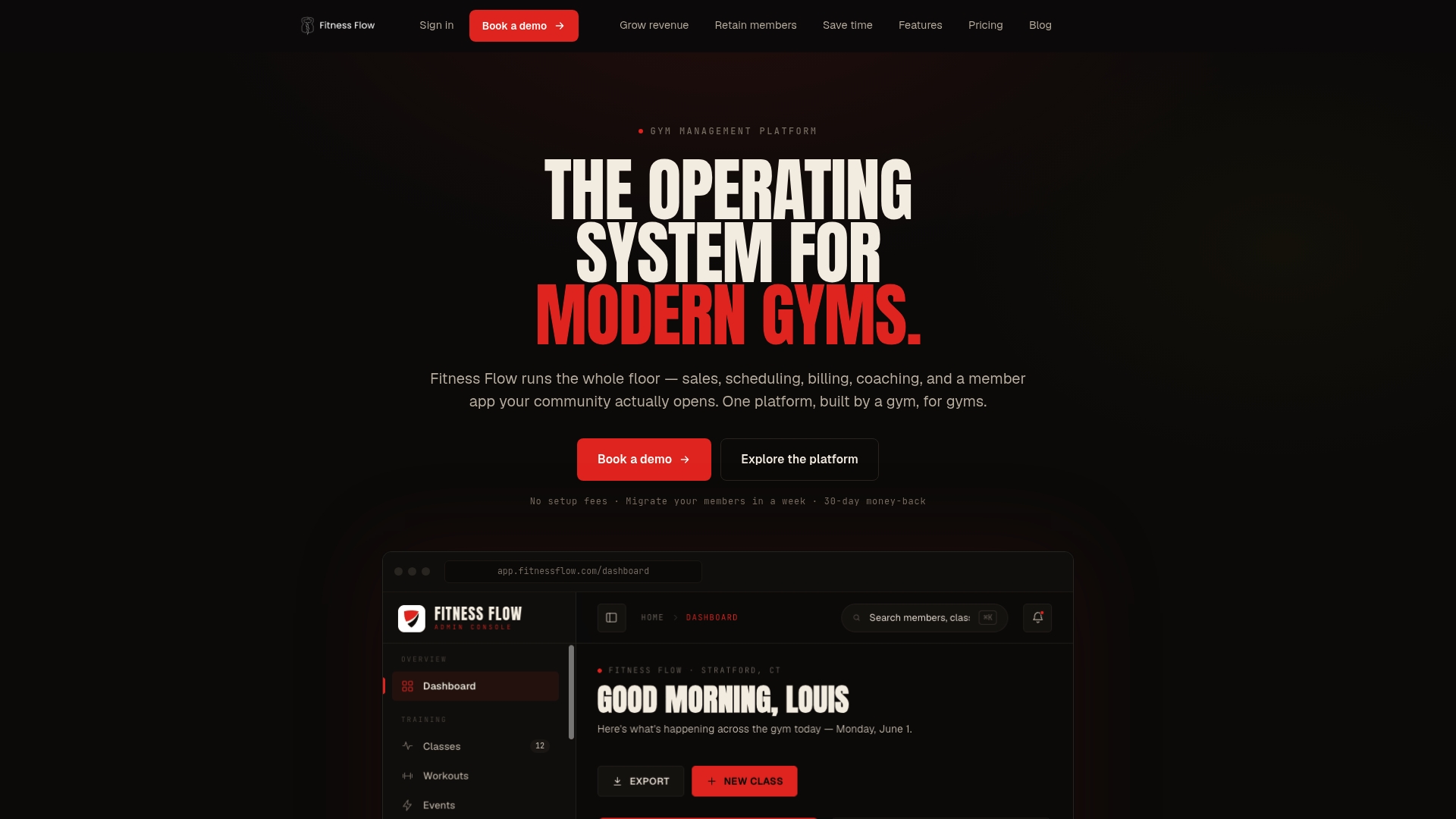
Suppression updates sync across the platform automatically, so a STOP reply in one place is honored everywhere, and owners can pull an exportable consent report instead of digging through old forms. If you want to see how Fitness Flow handles opt-in capture and reporting alongside billing and scheduling, you can review the Solo, Studio, and Multi-site plans and book a demo.
Primary documents and authoritative guides
For the original language behind these rules, consult the FCC’s one-to-one consent FAQ, The Campaign Registry’s 10DLC guidance, practical consent implementation guidance, and the FTC’s spam reporting guidance. For a broader compliance overview, see the Nectar Blog’s SMS marketing compliance rules.
Sources
- One-to-One Consent Rule for TCPA Prior Express Written Consent Frequently Asked Questions (FCC)
- A beginner’s guide to A2P 10DLC campaign registration (SignalWire)
- ActiveProspect blog — SMS consent implementation guidance
- How to recognize and report spam text messages (FTC)
FAQ
Do gyms need separate consent for marketing texts and appointment reminders?
Yes. Operational texts like booking reminders can rely on a narrower consent standard tied to the transaction, but marketing texts need their own affirmative, seller-specific opt-in under the FCC’s one-to-one consent rule. Mixing promotional content into a reminder template undermines that separation.
What exactly must an SMS opt-in disclosure include?
It should name your gym, state that messages may be recurring and automated, give an approximate frequency, note that message and data rates may apply, and include STOP and HELP instructions with links to your Privacy Policy and Terms, based on implementation guidance for promotional SMS. Consent must also be stated as not a condition of membership.
Is 10DLC registration the same thing as consent?
No. 10DLC registration is a carrier and technical requirement covering your brand, campaign description, and sample messages, separate from the per-recipient consent you must still collect from each member.
How quickly must a gym honor a STOP request?
Opt-outs should be processed promptly once received, with the suppression synced across every messaging and CRM tool you use. FCC guidance on revocation addresses timing expectations and includes an enforcement extension to January 31, 2027 for certain cross-topic revocation scenarios.
Can a gym use a number collected for billing to send marketing texts?
Not without separate consent. A phone number given for billing or scheduling is only presumptively valid for operational messages, and sending marketing content to it requires its own affirmative SMS opt-in checkbox.